
The Social Postman

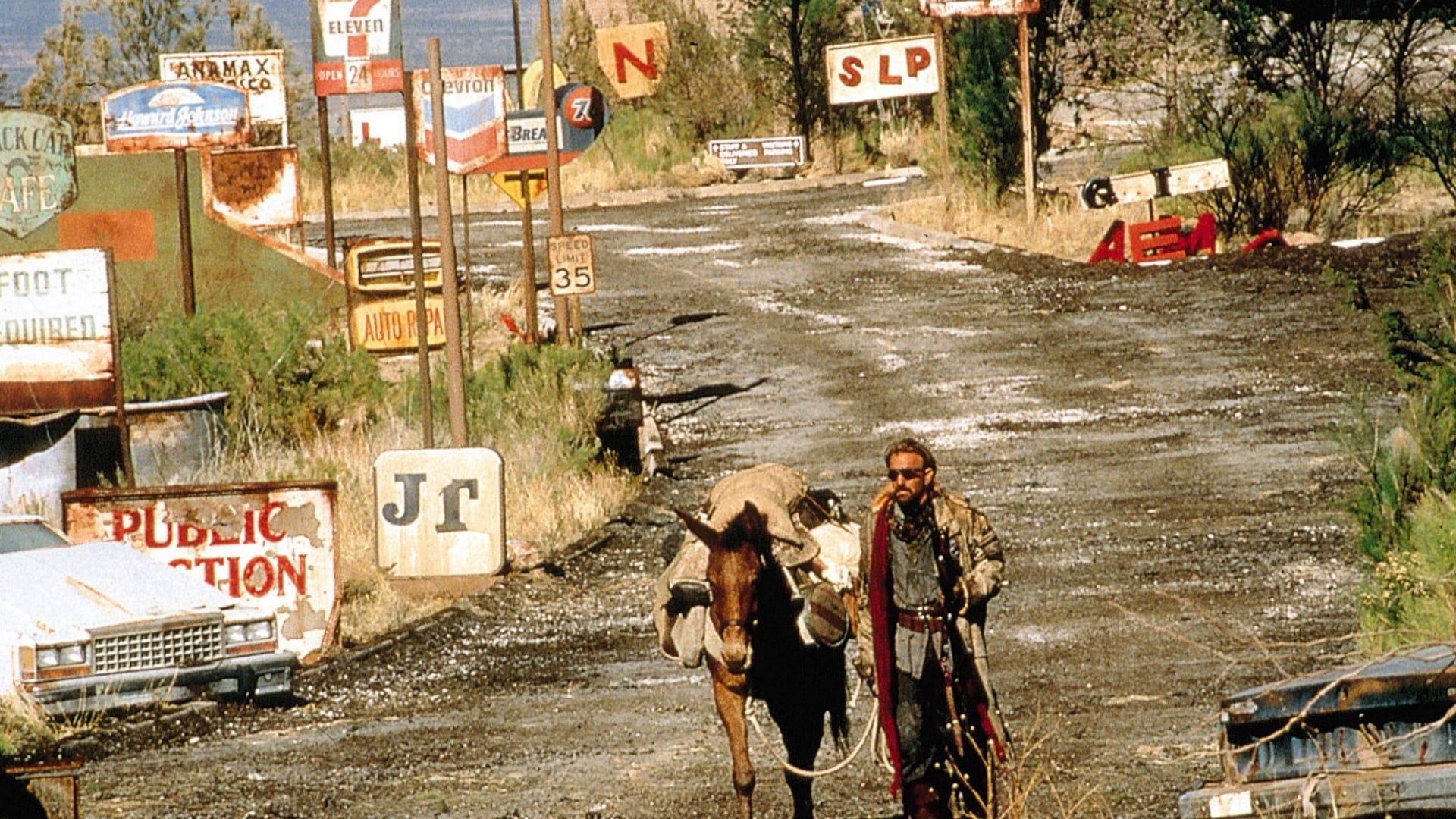
The movie "The Postman", after the eponymous David Brin novel, is interesting at several levels. The movie aired in 1997. It was done just before the era of mobile phones and widespread access to the internet. It appears like a different planet thirty years later. The movie was an unmitigated commercial disaster despite Kevin Costner being at the top of his fame at the time.
The novel from which the movie is inspired had a much more enduring success. And if the pitch is simple it tackles deep issues. In a nutshell: it is a post-apocalyptic story set in a dislocated United States after a catastrophic collapse caused by war, disease, and societal breakdown (never really clear). The story follows Gordon Krantz, a wanderer and former college student. After losing everything, Gordon finds an old postal worker’s uniform and a bag of undelivered mail. To gain food and shelter, he poses as a postman for a fictional “Restored United States of America,” delivering letters and spreading hope.
Communication and Society
The transparent themes that are developed in this story are about the role of communication in the building of a society. Quickly:
There is this idea that the postal service could serve as the backbone from which society could be re-birthed. The postal service is at the crossroads of ideas and objects. Letters are ideas but they are still embodied in paper. They travel at the speed of a horse, have a weight etc.
It is a lie that leads to the rebuilding of a nation. At first the postman is lying about the fact that he is a postman (he is just a guy who found the outfits of a postman and jumped into the role), then he really becomes one. This this idea that a nation is a lie coming to reality has merits. It is essentially the famous Renan’s speech “what is a nation?”. A nation is a shared myth that has this feature of transforming an idea into a tangible reality (the exact opposite of what a letter is).
The recurring themes of information and tyranny: by spreading information the hero is fighting the ideology of the oppressors. At the time there was this idea that the highway of communications were going to set the world free... There is also this upside down idea that decentralized organizations were the embodiment of tyranny vs central authority (the return of a top down institution to restore freedom) that would be the only civilized way to govern. This is a very good embodiment of the fear of institutions in face of the technological revolution to come.
The Influencerman
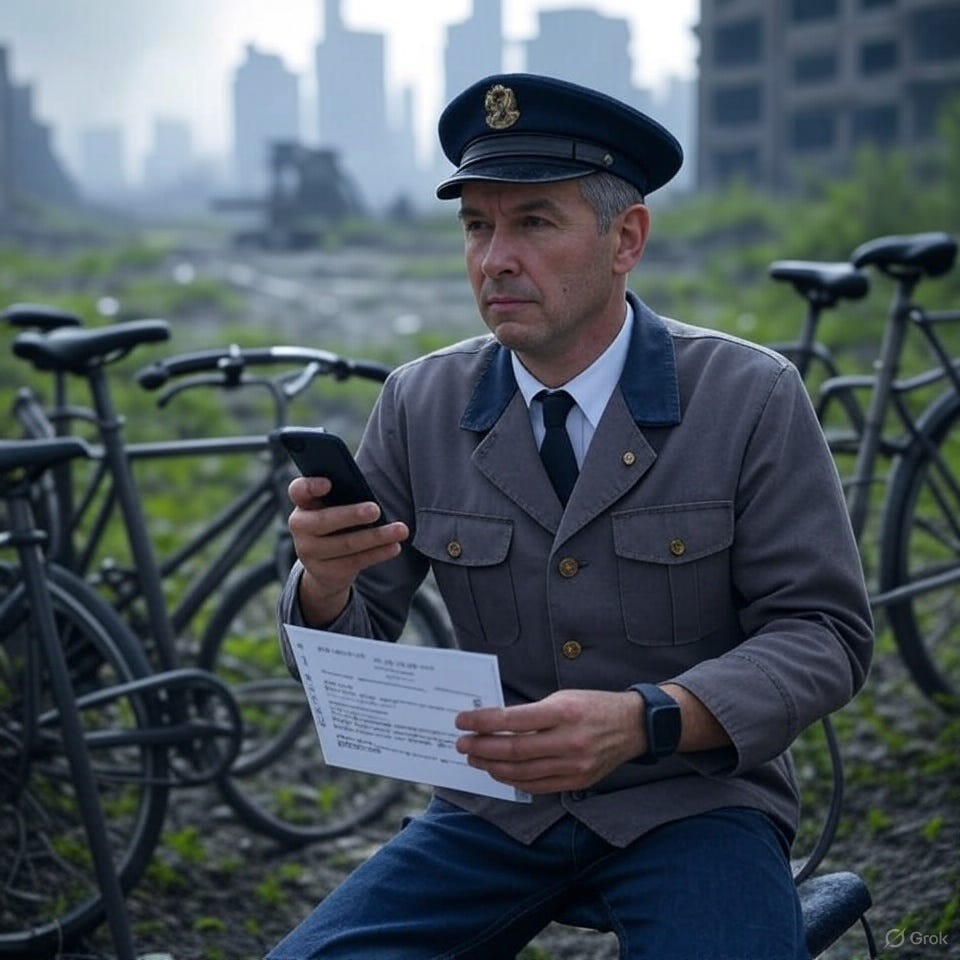
Fast forward 2025. The post service has ceased to exist as a meaningful institution. If anything it has become the poster child of materialistic culture: Temu packages and post-modernity proletariat in a single frame. People have left epistolary culture, a point to point communication, to social media posting: short messages to an open audience. You can measure how times are a changing by how impossible it would write an adaptation of the novel to our times. Is it possible to imagine that influencers are going to restore freedom and fight tyranny? In the 2020s the influencer is more likely going to be a tranny trying to enforce cancel culture. Mostly without leaving their basement, another stark contrast with Mr. Costner riding the American north western plains. Influencers don’t touch what they smoke.
As the hero, the Influencerman is hiding is true identity behind a disguise. This is not a true outfit, but rather a list of flags that are displayed on their bio depending on the "rage du moment". But one would be hard pressed to see the influencerman as a hero. Because instead of sustaining the lie until it becomes a reality, the influencerman is flying from one set of lies to another one. Kevin can’t change is outfit by snapping fingers or clicking on a new banner depending on the current thing. The influencerman is not holding the line in front of adversity, it is rather to amplify the messages allowed by the algorithms. Influencerman is not motivated by ideals but by numbers.
Medium (is) matter(s)
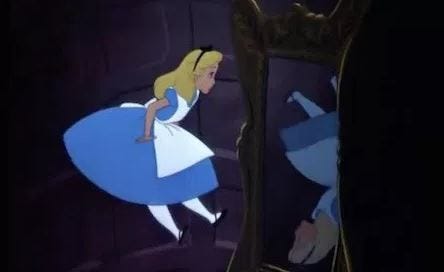
The medium is the message is a fractally true proposition in both the Postman and the Influencerman stories. As information exchanges have become more virtual and permanent, they have lost contact with reality. As often the virtualization has the property of flipping everything upside down: notice how the single obsession of the Postman corresponds the ever changing topics of the Influencerman, observe how the Postman is gathering communities is in contrast with the Influencerman only caring about attention towards themselves, there is one Postman but countless social media platforms, the letters distributed by the Postman are about connecting people while Influencerman games the algorithm using rage bait and division as messages, etc.
Another feature of the story that makes it even more relevant of our times is the Cyclops: they are AI coming from before the apocalypse and are seen as force for good. Compare with AI doomerism of today. Cyclops is seen as holding the secret to rebuild society, not as the destroyer of it. Cyclops is instrumental in helping the revolt. I could go on for screens but I think you get it at this point: The Postman is a movie coming from the other side of the mirror.