
The Filth Element

The Aristotelian twist to the four elements theory —the possibility to move from one element to the other and the addition of aether— was more subtle than the modern believes. Anyway the metaphysical controversy dragged on for millennia after having morphed into the Trinity issue in Catholic circles. Digital technologies are pouring magnesium powder to the fire and it is producing a magnificent firework. Others would rather describe it as a kinetic part of a cultural war but everything is relative you know. The subject of this essay is around a proposition that somehow seems to pop up everywhere at once around the globe: digital ID.
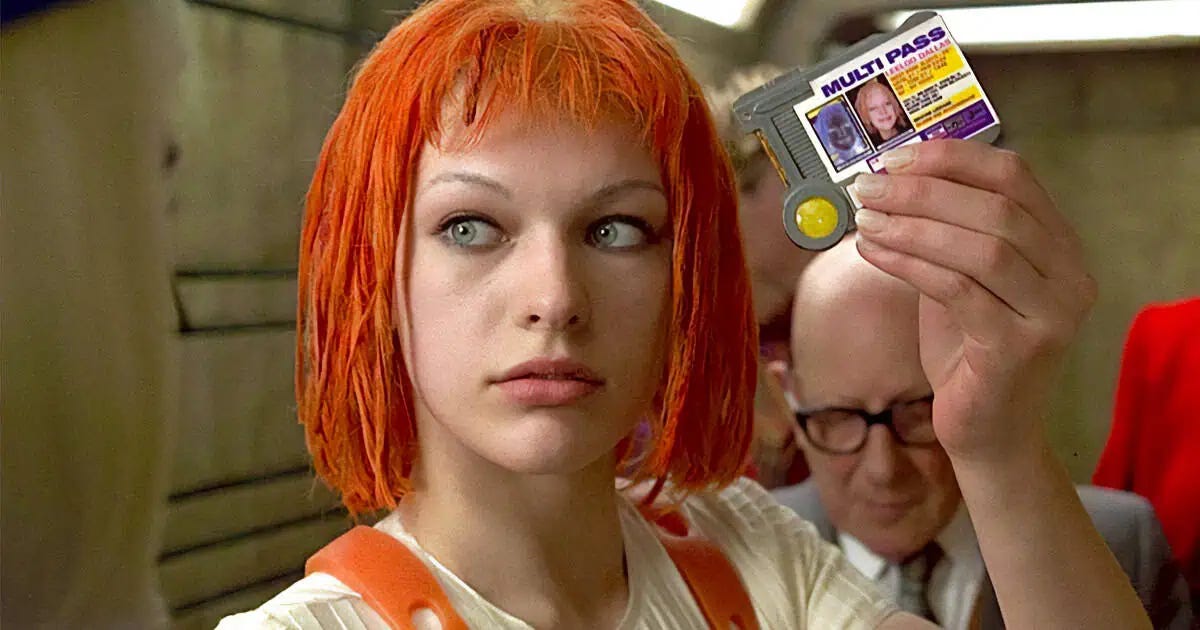
This urge to digitalize life
Life was going through as usual in the west, with its nuclear war threats, extra judicial killing and other political assassinations followed by celebrations and their aftermaths, when last Friday the prime minister of UK announced in a speech that a digital ID will become mandatory to have the right to work in the UK. The following week-end Switzerland narrowly approved, 50.4% approval, a new electronic identity card. Earlier this year South Korea unrolled its version. Moreover, EU is slowly establishing its own version EUDIW that is going to be mandatory in 2026.
There were already countries having mandatory, or not, electronic/smart/digital identity schemes for decades now : Indonesia (2011), South Africa (2013), Estonia (2002) etc.
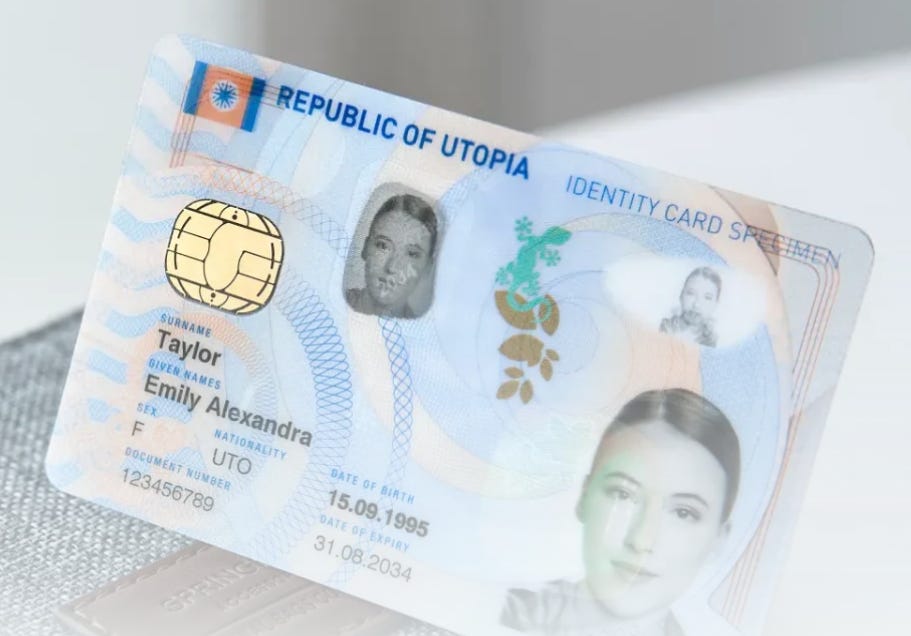
There are many many, and more than you imagine, questions about what is digital id. But one question appears very straightforward: since digital ID schemes exist form more than two decades, why this urge to adopt digital ID schemes in countries that were not using ? Why do new mandatory propositions pop up around the western world now ?
I don’t have a definitive answer, maybe there is none, but the fact that it is an explicit target of the 2030 agenda, it is SDG 16.9 to be precise, has maybe something to do with it… What are the objectives of this UN 2030 agenda target? In their own words (copy paste from the institutional website):
Recognition and registration of legal identity is critical for the realisation and measurement of around 67 indicators across 12 SDG goals.2 A lack of identity documents can lead to denial of access to social support, vaccinations and health care, and education. Access to employment, financial services and mobile phone services may also be limited, leading to exclusion from the formal economy and poverty.
I am doing my best to not fall into a crazy Alex Jones conspiratorial state of mind, but you have to admit that they are not helping. Maybe they were inspired by the reading of the Apocalypse, or maybe it is just a series of unfortunate coincidence but the UN text really reads like:
The second beast was given power to give breath to the image of the first beast, so that the image could speak and cause all who refused to worship the image to be killed. It also forced all people, great and small, rich and poor, free and slave, to receive a mark on their right hands or on their foreheads, so that they could not buy or sell unless they had the mark, which is the name of the beast or the number of its name.
Revelation 13:15-18
I will refrain from deep theological analysis here, but at the very least this small excerpt shows what is at stake: in the Bible the first thing that humans do is to cover their intimacy with fig leaves —before the fall from Eden Adam and Eve are not humans in the full sense because if they have free will, the original sin changes them very deeply—, and the last thing they do, I mean it is the apocalypse, is to be denied privacy… at the very least the importance of privacy issues for humans are not on the same scale as the marginal rate of such tax, or about regulations over cars.
What’s coming
Digital ID scheme is a subject so vast that is not possible to tackle with it in a single post. I am planning to come back to it later. There are so many ways to consider the issues related to digital identity that I am going to just list them to give an idea of what is at stake. I am going to order the list of concerns linked to digital ID schemes by tiers of abstraction (from the most abstract to the more concrete). Each point should be developed into one or several posts specifically addressing this issue. I am making a list of what pops up to my mind at the time writing, but I will be back on the subject for quite a long time.
Humans are not numbers. At the most profound level the digital ID proposals are attempts to collapse the world of ideas with the objective world. To reuse the Aristotelian concepts: it amounts to collapse the Aether to the other four elements. As Shakespeare wrote “We are such stuff - As dreams are made on”. You can’t just lock humanity in numbers like you would lock a criminal in jail.
ABC - Authorization Based Citizenship. There are various proposals but many explicitly link the digital ID to access capabilities. It means that it changes how we understand what a state is. In a republic, the legitimacy flows from citizen to institutions. Under a digital ID system that would control basic everyday life (working, the ability to use common transportation systems, banking system etc. read again the 2030 quote), it goes the other way around: it is the institutions that grant you rights as a citizen.
The right to be left alone. There are various amendments of the US constitution that are directly or indirectly impacted by a mandatory digital ID system. They are the ones gravitating around the idea, that is not explicit but always present, that you have the right to be left alone and live your life (at least as long as you are not interfering with others). At the very least you can build a case that such a system would greatly diminish the range of those amendments. I am certainly going to write a post for each amendment and its relation with digital ID schemes later. The ones that come to mind are the 1st Amendment —freedom of association—, the 4th Amendment —protection against unreasonable searches and seizures— and the 5th Amendment —protection against self-incrimination— and the 9th Amendment —reserving to the people rights not explicitly enumerated—.
There is no such thing as official truth. This aspect is at the same time very abstract but also very concrete. It is akin to the issue of having the institutions playing the role of the ultimate fact checker. Do you remember the ton of shit that institutions told during the COVID crisis ? I don’t give a fuck whether or not they were “trying to do good” (they were not). The fact is they fucked up at multiple levels. And digital ID schemes are just the continuation of such policies with other means. Reminder:
Security arbitrage. Of course the institutions are going to present digital ID schemes as secure (without ever entering into details but with a lot of arguments of authority) and as being useful (it is going to make your life easier, more productive, and all the usual blabla of a car salesperson). For once the system will be hacked (it is not matter of “if” but of when and how), and the claimed benefits in terms of security are unclear. Just one issue (but as I have written above I could expand each point into several posts) : what is going to happen when you lose your access to the digital id (when your house is going to burn, when you lose your smartphone, you don’t remember the magic number etc.) ? Surely there will be ways to recover your identity (because by definition identity is what doesn’t change). What are those ways ? What security the digital ID scheme brings that this basis doesn’t ? Because I can lie and pretend to have lost access to my ID. So you will have to believe in other things than the digital scheme to re-establish the system… and at the end of the day why do you have a door with 5 lockers if the wall is in paper ? And it is not like you can avoid this issue. It is going to be an everyday thing. Maybe you have now a better understanding of the question: do you really increase the security in a global sense by adopting a digital ID scheme?
What if a war is lost ? Even if you grant your preferred institution an unlimited trust, something like “they would never do that” (spoiler alert they will), you have to think at the worst : what if your country is invaded, I mean Russian style ? The fact that you are gathering information about your population becomes a huge security risk. There is nothing like a centralized extensive database of citizen for the ones looking at the purge of the system. I am very reluctant to use reductio ad hitlerum arguments but you can imagine very easily how such schemes would have played in other times. Are you ready to grant your institutions with a loaded gun under the promise that they are not going to use it ?
Turnkey totalitarianism
I have barely scratched the surface of this subject. Whatever the solutions that are going to be implemented, it appears clearly that our very notion of what citizenship means is going to be impacted. And since the citizen are supposed to be at the root of legitimacy, it means that the whole of our political institutions are impacted. What does mean democracy under this framework? For instance : have you the right to refuse the digital ID but still the right to vote? If no, then it means that the social contract has been changed, like the Terms of Service of Facebook : you just have to click “yes I accept” or else… Or else what precisely ? When you think of it you see that at the very least digital ID schemes build an infrastructure that could change the nature of the regime in a click. I personally don’t think that it is good civic hygiene to have such systems.
The digital ID scheme acts as a filth element that contaminates all the other elements. It messes with very deep metaphysical aspects of our lives. Do you amount to the administrative version of yourself (the file stored and attached to your number)? Has the administration a preemption right over your rights? That is why, I am sorry Mr Starmer, it is not something that can be decided on your own and never discussed. Even if a majority approves such scheme I am not sure that it gives the mandate to alter the life in common so profoundly. For instance if 72% of the population is ok to kill me it doesn’t make it right.
Truly a hill to die on.
Maybe it would be alright if all public workers had a public worker ID, so the public can theoretically track all their work-related transactions - that is, how the tax-funded budgets are spent to the dot on the i.
People should also, in the light of this - especially when the digital ID is rolled out, learn about the difference between identification (number) and personhood. So, when an officer stops you, you actually have more rights than most people think they have - if you ask, the police officer should identify themselves (first and last name)... On the other hand, when dealing with such public representatives, remember that they tend to turn their heart cold (if they have one - lots of psychoes are attracted to those jobs, however, and the institution-provided indifferentiation of personhood FITS perfectly for them) and talk to you AS (or on the behalf of) The Institution (that they represent); Whereas turning their heart cold is evermore easier when they reframe this conversation as something that goes on between the institution and an ID number - and not as a person to a person.
The coldest of them all will even maybe repeat something like, "I'm being humane here," while you are questioning an unexplained arrest (of your personhood, your ID, or your belongings/property).