
The Babel Timeline

Something really unprecedented is happening with the Iran war. For the first time since we entered a digital era, say something like 2013 when the first billion of smartphone came out, I am getting more news by legacy media than through social media. Just like the straight of Ormuz, it appears that the flow of information has been cut on the timelines. The difference is such that it is sensible. But it raises all kind of questions that I am going to tackle with in this piece.
How would you know ?
Since the flow of information became a personal matter mediated by algorithms, it seemed like the middleman—the TV anchor—was no longer needed. And indeed, the COVID crisis proved beyond any doubt that online commentators were more trustworthy than your average broadcast news. It was a move in two parts: first, online commentators don’t have to answer to a hierarchy that can be pressured; and second, precisely because legacy media wanted to counter misinformation, they increasingly relied on material provided by “verified sources.” In other words, they became echo chambers for the powers that be. This created a kind of double bind. But on top of that, the fact that X was bought by Elon Musk changed the direction of online censorship. Trigger words and other "deadly sins" like misgendering were thrown out, shifting the Overton window. A kind of monopoly took hold.
So people used their timelines as the main source to get news. As a user, you felt better informed because of the multiplicity of sources. Instead of relying on a centralized news organization, you had access to individuals all across the world. This included eyewitnesses for many events. Moreover, people were able to record and upload their footage directly to social media. A kind of distributed news system. What could go wrong?
The war in Iran is an extreme case. Things are happening. At least I know this because the price of oil has skyrocketed. Yet, I don’t see anything but AI slop and fake news on my feed. And I have always been talking about geopolitics, I am not on social media for kitten videos (so the Algo know it). It makes me wonder: how would I know anything if the Algo decided not to show me? It turns out, I wouldn’t. I notice that the trend that was the most prominent over the last year has inverted: instead of seeing legacy media commenting on social media information, this time, the only interesting information I get on social media comes from legacy media. But I would be hard-pressed to “prove” it. Because it is essentially the same issue: on social media, it is what it is. I don’t even know what my neighbor is seeing on their timeline. By some accounts this war acts as a massive spatial object that bends the spacetime so much that you can see that light is no longer moving in a straight line. But short of such huge events how would I know ?
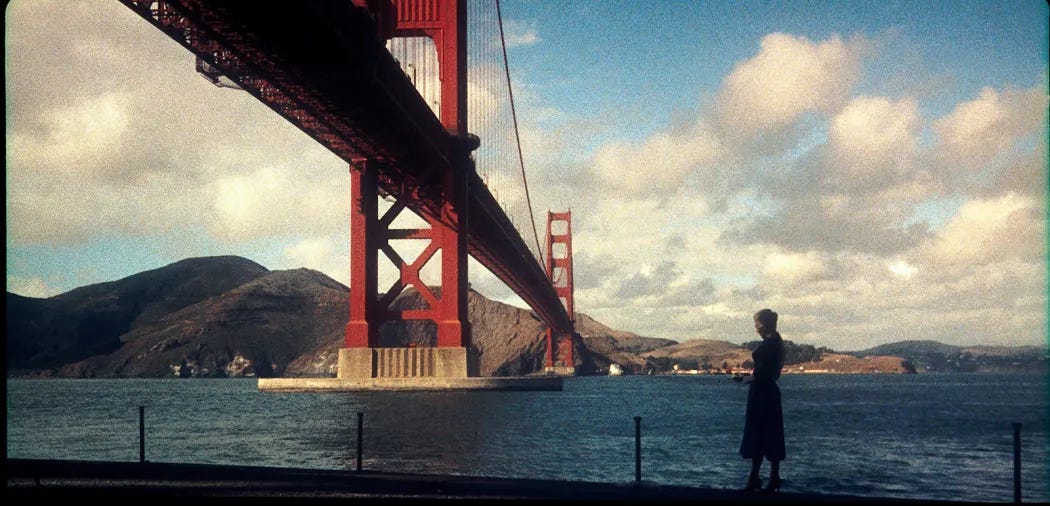
Vertigo
News was seen as a commodity. In the same way that one gallon of gas here is the same as another gallon of gas there—at least at the gas station—news heard on CNN used to be the same as on CNBC. It changed precisely when social media entered the scene: news broadcasts became commentary sections rather than news outlets. The move was forced in order to retain an audience. This move changed the news industry and brought it closer to the entertainment industry. News became oriented and tailored to the audience. Both on social media and on legacy media.
One effect of the digital world is to unify. A 0 in a computer's memory is the same as another 0 in another computer's memory. On your social media timeline, the format of a message is the same, whether it is the announcement that Khamenei died in a strike or a mutual talking about their experience in a pizzeria. It could also be a totally synthetic thing that looks like the real thing, now that generative AI is indistinguishable from real footage. No longer a micro-blog, but a macro-blob instead. The Iran war shows me that we have reach point where even the starting events of World War III cannot break the spell meaningfully.
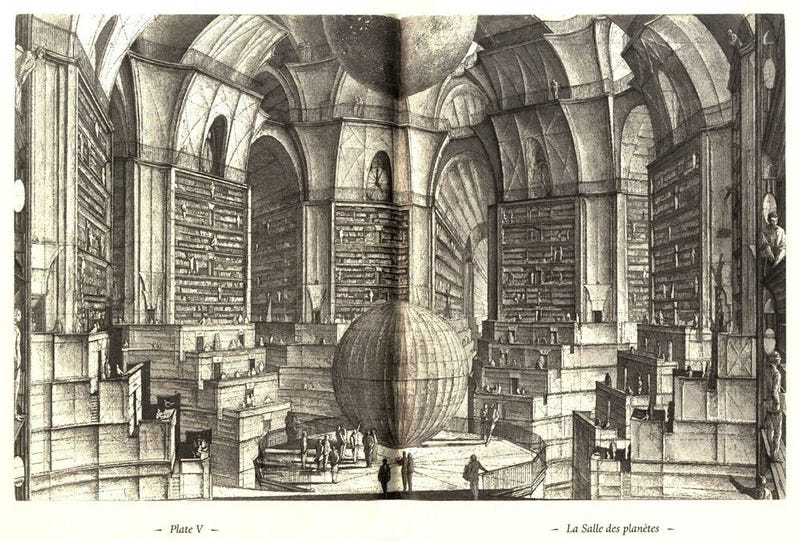
The video-club allegory
For an ancient like me, the experience of having to go to a physical place to rent a movie is a vivid memory. I remember spending time, energy, and money to select a movie for the weekend. Fast forward to 2026. I literally have any movie at my fingertips. This is not a figure of speech. I can access books, movies, and any cultural product in less time than it takes for the elevator to reach the fifth floor. Ultimate convenience. Yet I don’t choose anything anymore. Like Midas, who starved to death surrounded by gold, I am more like a leaf in a river. Likewise, the news on my timeline is not really chosen; it is endured. The war in Iran proves to me, beyond a shadow of a doubt, that this is not what I want to see. But I also find what I actually want to know unreachable. It is like a nightmarish version of an infinite video store filled with nonsense.
I am not sure that just touching grass is going to make it. The issue is not just personal. When information becomes the default, the intent disappears. The question is to incarnate intent within digital technologies. How? What I am sure is that it is not a question of CPU, memory chips or power. It is a human question.