
Con Census

I have been on the internet (not yet the web at the time!) since its inception. This is not a figure of speech but a fact. I was studying at the École Normale Supérieure de Lyon starting in 1992, and over there, students had internet access. At the time, no one knew what it was, and having an email address was a rarity. The average Joe wouldn’t have the faintest idea of what an email could be. The first user-friendly web browser—there were previous command-line versions good for geeks before—, NCSA Mosaic, dates back to 1993. At the time, I thought that the democratization of the internet was going to bring a net positive good to the world in relation to TV. The schematic idea was that, at least on the internet, you are not passively consuming content: you could answer, exchange, and surf the web. All are active acts and require the user to do things. It has been proven wrong at almost every level that you can think of. In this piece, I am going to focus on a strange aspect of this never-ending wreckage: the perception of the power of words and its dependencies. A key reason is the transformation of the job of journalists. The word used to describe the class of people working at the heart of the mediasphere is the same as the one that was used in the 70s, but it is barely the only thing left in common between two opposite activities.
Follow-ups
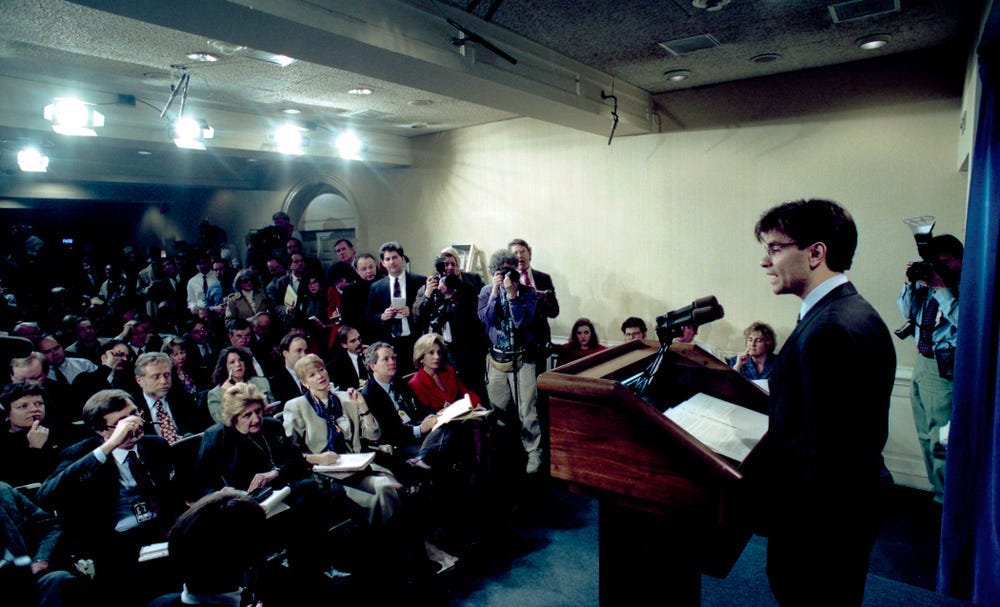
It took decades for the internet to transform the world, but since 2016 it has become undeniable: it marked the beginning of a new era. The election of Trump as POTUS can be used as a marker of such a change. Indeed, he used the power of social media to speak directly to his constituency and showed that the whole politico-mediatic apparatus could be toppled with the clever use of new information technologies. Since then, a formidable transformation of legacy media has taken place. If the public figure of the journalist up to the early 2000s was one who resists the powers that be by asking uncomfortable questions, the job flipped on its head. Nowadays, legacy media are nothing more than spokescompanies for the powers that be. This is partly due to the fact that those old companies were becoming irrelevant on the news front—in the sense of actual information. No one needs an anchor to read news headlines on a fixed schedule when access to social media like Twitter has become worldwide. Hence, the media companies rebranded their product. What they are selling now is the stamp of respectability and approval. In order to do that, they became very easy on the political class. It was a tacit exchange: we are nice to you, and in exchange, you come to make announcements on our network. The disappearance of follow-up questions happened one talk show at a time.
The most recent and striking examples are the completely demented media declarations by the Trump administration regarding the war with Iran. The war has been won dozens of times, the Strait of Hormuz is open/closed/useless, the MOU is signed and signals the end of the war or it is just a trick, etc. Many PhD theses will be written to untangle the list of sometimes self-contradictory statements that have been made on the war since last February 28th. It is almost impossible to understand them if you don’t have the key. Obviously, those statements are not about reality—if only because reality has inertia and can’t move that fast. So what is at play? The answer is going to surprise you, but it is in fact very logical and originates from this transformation of the media environment. The explosion of AI also plays a role in the story.
Since journalists—and AIs—are feeding on the words of the ruling class, the latter has noticed that journalists won’t ever ask follow-up questions. So they feel free to say whatever they want. This is not completely stupid or random either. By doing so, the ruling class tries to generate reality from their words and not the other way around. Let that sink in. It is even more pronounced now that AI is producing more content than humans, and AIs are even more subservient. If the POTUS says that there won’t be price issues with oil while the Strait of Hormuz is closed and Russia’s oil refinery sector is under severe attack, they won’t bat an eye. They will just relay the president’s terms. If you wonder why the markets are behaving like they are while 20% of the supply just vanished, observe which statements are being made and when. Note that this is a self reinforcing loop: Trump announces that everything is fine, markets react accordingly, and until the body has reached the ground everything is fine. Same remark applies to AI who are fed with news articles and data points from financial markets. The turkey lived an happy life up to thanksgiving after all. Humans were friendly, brought food and every day reinforced the induction fallacy…
AI Bubble
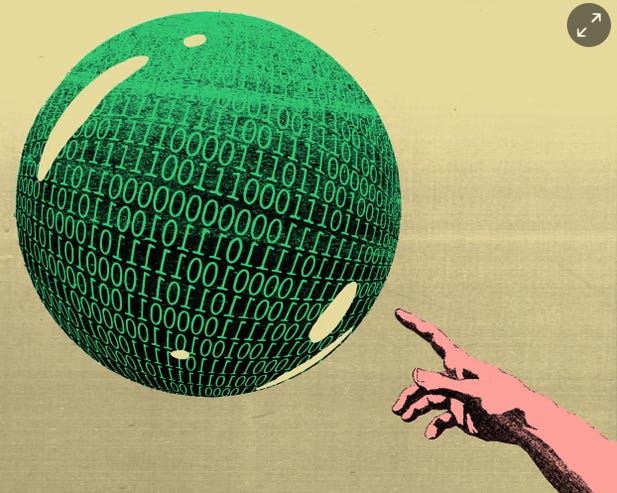
The AI bubble is going to burst. When you read these words, you are thinking about the financial markets. I am thinking of the epistemic bubble; we are not the same. What I have described in the last section is another kind of bubble than a financial one, yet it follows the same laws. Hope and imagination move faster than atoms and go beyond what actual machines can do. There are no fuel or power shortages in the realm of expectations. More and more, our mental landscape behaves like a magical kingdom. Just make a request, and the AI genie in the oil lamp is going to grant your wishes. Current AI systems are, at their core, very sophisticated mirrors. They reflect what has been said, not what is. Feed them a media landscape where follow-up questions have disappeared, and you get a very confident, very well-spoken oracle that has never once touched the ground. AI doesn't fact-check power but launders it.
On top of being more and more separated from reality, these speeches are also poorer and poorer (hence the AI production will be lower and lower in quality). Indeed, why bother building elaborate arguments when a position of authority is enough? This aspect has been seen countless times during the COVID crisis. Take one point: the CDC and WHO didn't want to acknowledge that it was an airborne disease for months. At the beginning, no one was sure, but quickly it became self-evident. Yet they never acknowledged it and silently updated their web pages in mid-2021 as if nothing happened (while public policies like "6-foot distancing," etc., were enacted because of this). Another example is given by the recent adoption of the ban on social media for under-15-year-olds in France. Here is a random tweet about the vote in the Assembly by a representative:


It says (the quoted tweet says the same thing with different words):
I welcome the adoption of the legislation banning social media for those under 15.
A historic and courageous decision to protect our youth.
France is leading the way in addressing the health and educational challenges posed by social media.
We must now push for harmonization at the European level.
This appears to be purely performative. No information or argument is given. That is not the point. This in fact goes further than virtue signaling: by multiplying those data points, AIs that are going to be asked about that will be skewed. If you want a picture of the very proximate future, imagine the DPRK Supreme People’s Assembly clapping at the last statement of Kim. Will you be the first to stop clapping your hands?
Con Census
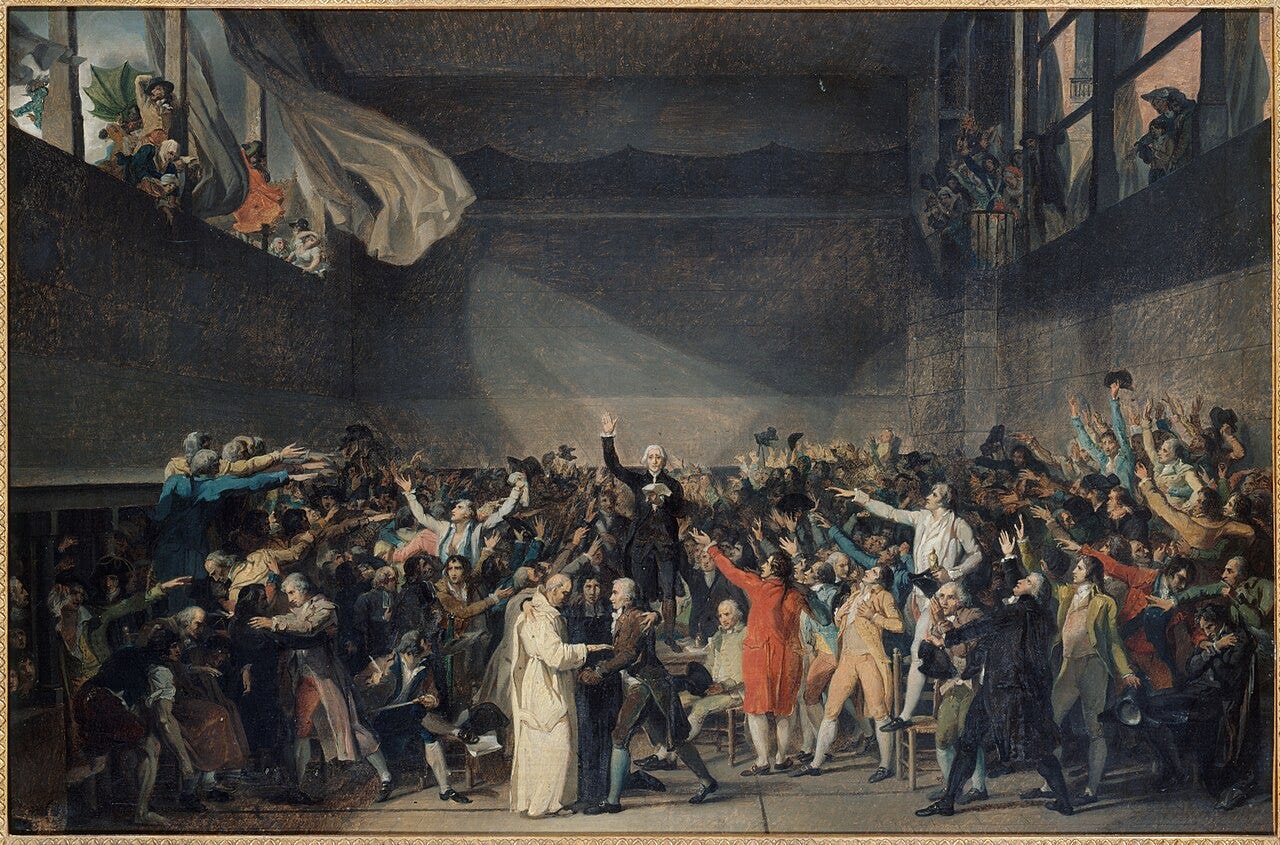
What we are witnessing is no longer propaganda — propaganda requires an author with an intent. What we are witnessing is something more worrying: a system that produces consensus without anyone having decided to produce it. Journalists relay without questioning. AIs amplify without understanding. Markets price without grounding. Politicians declare without consequence. Each actor in the loop behaves rationally given their local incentives — and the aggregate result is a world in which truth is no longer the primary phenomenon but a derivative one. We used to ask: is this true? and derive from the answer, and the work provided to produce the answer, whether it deserved consensus. We now ask: is this consensual? and derive from the answer whether it qualifies as true. It explains why no accountability exists anymore within institutions. Truth is not eternal, it is just the picture of the intent of actors. Mood changes, truth follows.
This inversion is the system. And like all closed loops, it does not self-correct — it self-reinforces, until the moment the real world re-enters the equation. Atoms have inertia. The Strait of Hormuz is either open or it isn’t. At some point, the body reaches the ground. The question is not whether the bubble bursts — it always does. The question is what remains when it does, and whether anything was built outside the loop that is capable of receiving the shock.