
Closure and Leisure

Five years ago—a lifetime in internet years—I wrote about a defining feature of the digital age: 'The End has no End' The idea was that conversations on social media are effectively open-ended; you never know who will join, when they will chime in, or how a discussion you started might evolve. It is now time to revisit this concept and see how things have changed. Here is a quote from the article that has proven to be more prophetic than I could have imagined.
And like Penelope working on her shroud forever, we can always find reasons not to finish the work and dodge accountability of our own ideas.
The remark was made in reference to books that are precisely defined objects, but it can be extended to virtually every other domain, and today we are forced to conclude that it is indeed the case. Let’s have a look at recent events under this light.
The end of the world … orders
The paradox is that this lack of an ending is happening while we are going through the largest disruption in public life since at least the end of WWII. The international order is dissolving in real time. I could pick a dozen examples, but perhaps the most striking one is the current POTUS bragging about the fact that the US Navy acted like pirates. I know it is just Trump being Trump. Yet, freedom of navigation was enforced by that very same US Navy and was one of the pillars of the world order as we know it: globalization, etc. Apparently, they don’t give a shit about it anymore. If it were only a verbal slip from the POTUS, the question would still be legitimate (was Trump just trolling as he is wont to do?), but after Venezuela, the constantly renewed threats towards Cuba, and in the middle of the situation with Iran, it is another story.
When I write “something with Iran,” it is not a figure of speech. I genuinely don’t know what is happening, and I don’t know if anyone does. In itself, it is a glaring example of how strange our times are. Israel and the USA started large military strikes under vague and constantly changing pretenses. It is not a war, according to the POTUS, but we are now in a cease-fire (so surely there was fire) during which both parties are carrying out what were previously considered acts of war (naval blockades), with moving—perhaps undefined?—deadlines and a general lack of clarity regarding what the opposing parties are seeking.
And indeed, it is even harder to imagine what an end could be if there isn’t even a clear beginning to start with. On social media timelines, there are never “begin” and “end” signs related to a trend. What is even more difficult to grasp is that, depending on your profile, it is not only what you see that is different, but when you see it. Again, there is this illusion of objectivity because you don’t consciously set the parameters of your timeline. The platform is observing your behavior, and that of hundreds of thousands of users, in order to decide what your next scroll will make appear on your smartphone. Thus, it looks like something from the outside; moreover, it is emanating from an object. So, it might seem as objective as gravity. At least, that is how it is intuitively perceived.
At the beginning of the era of mass media, there was this idea that the world was becoming like a small town because anyone was able to learn about any other part of the world very quickly. The “global village” or the “flatness of the world” were terms coined to capture this idea. They were incorrect diagnoses. The point is that communal life in a village follows a calendar. A village is not just a localized geography. It is also a local way of organizing time. Seasons start and end with village fairs, garage sales, etc. On the internet there are no equivalent. What is witnessed here is that the end of the world order is not only operating at the scale of geopolitics but spread across all scales. It’also works from the individual the global humanity levels even farther since you had social media posts delivered from the Artemis crew when they were the farthest from earth than any human ever reached.
Boundaries and closures
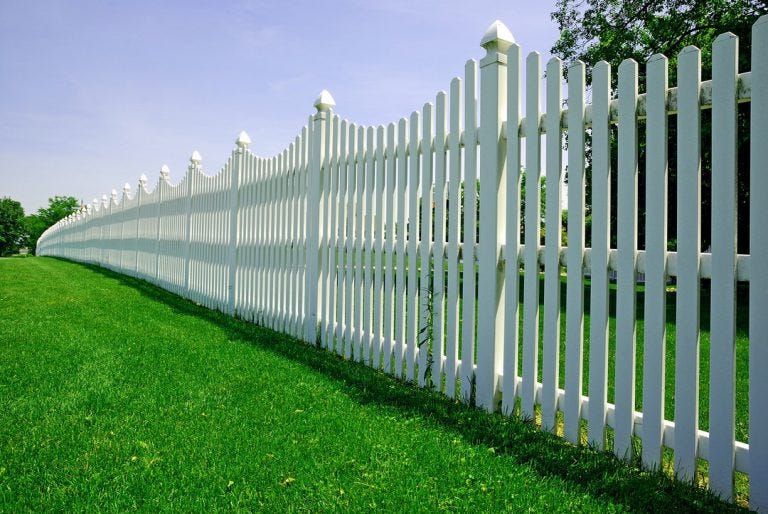
This absence of borders goes even further than just time and space. How is it possible? It also manifests itself in the realm of ideas, where no such boundaries exist. Issues are never resolved or closed. Take any subject of importance—from the Epstein files, the incoherent COVID policies, and the many occurrences of political violence (do you know anything substantial regarding the C. Kirk assassination or the various attempts on Trump over the past year?) to the Nordstream explosion, and not forgetting how the US government actually works (do you remember the Biden administration, during which “a team” was doing the work of an incapacitated president?)—and you will see that for each affair, there is no definitive resolution.
It is not totally new: there is yet to be a conclusive and widely accepted resolution for the JFK assassination, despite a Day 1 promise of file releases by the current administration; but nowadays, it appears that every subject of importance is left open. And you have to understand this in technical terms. It is like an “open set” as defined in topology. The most intuitive way to understand an open set is that it is a set that contains no boundary points. From an intellectual point of view, this translates into the following: any progress in your understanding of an issue never reaches a conclusion about that issue.
An alternative way to understand an open set is in relation to closed ones. Precisely: the complement of a closed set is an open set. I am not going to give a course on topology here, but keep in mind that it is trickier than it appears, because a set can be both closed and open at the same time. It is another example where double negation is not equivalent to an affirmation (intuitionistic vs. classical logic), and there is a direct link to computability theory, where open/closed sets can be seen as semi-decidable/decidable sets. This link is essential here because being in a digital culture means that our primary access to culture and knowledge is mediated through… computers. So, it should come as no surprise that the mathematical structure behind computer science has something to do with the way things are.
Science Friction
Yesterday was the day of the Met Gala. It is perhaps the closest thing we have left to the kind of calendar events I was talking about earlier. It is something like Paris Fashion Week, but concentrated into a single event, making it easier to dominate a social media cycle.
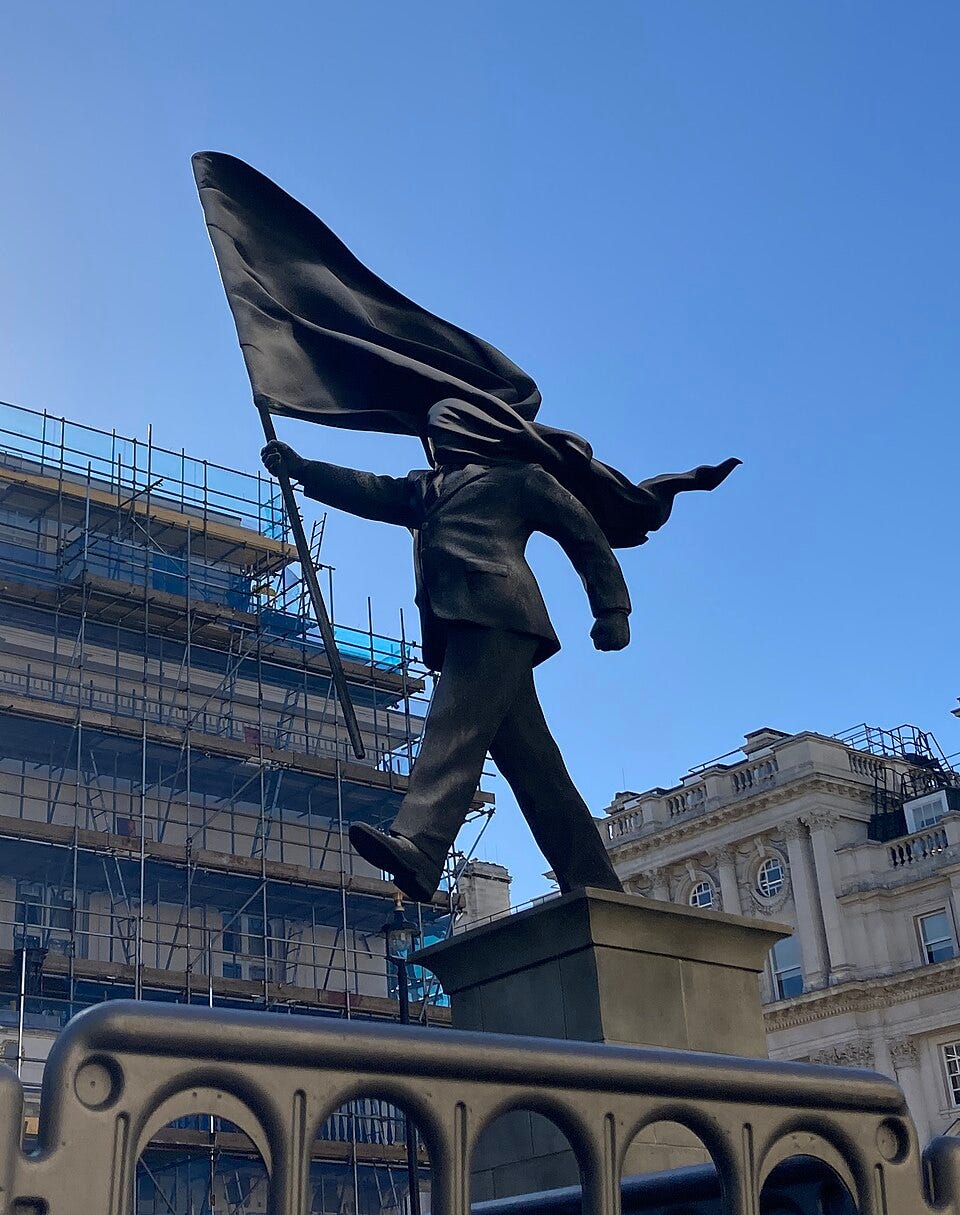
The event is also perfect because it allows anyone to project anything onto it: there are no speeches. There are only pictures of eccentric outfits. Just like the latest Banksy sculpture, the absence of an explicit message is a feature. In terms of openness, note that this event is also structurally open to interpretation. The lack of definite borders is manifesting again. The fit with digital culture is clear: locally, any user can project their own obsessions onto the event. And this is the central point I want to make here: we are witnessing the evaporation of the idea of friction.
Digital technologies are removing every barrier in the world. It is true at every turn you can think of. This absence of borders is liberating but also disorienting, because there is nothing on which you can find rest. The disappearance of the ancient world order is happening faster than new milestones can be set up along the road. This has happened many times throughout human history. The end is never the end. Take the Book of Revelation in the Bible: you can read it as an allegory of such a transformation. The “end of times” is the end of a specific way of understanding the world. Compare with the end of a video game. It is not really the end because you can play again. Forever. Leisure has no limit.
The difference, this time, is that we are playing with real ammunition. Humanity has reached a technological peak that makes the physical destruction of the world a real possibility. Attila was not able to launch nuclear warheads, nor were his scientists were able to mutate a virus into a supernatural disease with the potential of wiping out human life from the globe. Today, we have such capabilities.
> any progress in your understanding of an issue never reaches a conclusion about that issue.
I've had this with philosophy books, working on a solution
You can interpret continental ( Deleuze) through analytic lens ( Land)